Prophet & Righteous Mother
Holy Prophet Zachariah and Righteous Elizabeth
✓ Comprehensive Orthodox source review completed
The holy parents of Saint John the Baptist, who remained faithful to God through childlessness, persecution and martyrdom.
Core account checked against The Holy Gospel according to Saint Luke, chapter 1 — Biblical foundation of their life, Orthodox Church in America — Holy Prophet Zachariah and Righteous Elizabeth, Parents of Saint John the Baptist, Orthodox Church in America — Nativity of Saint John the Baptist. Additional ecclesiastical references appear below.
Life and Witness
Righteous before God
The Holy Prophet Zachariah and the Righteous Elizabeth were the parents of Saint John, the Prophet, Forerunner and Baptist of the Lord. The Gospel according to Saint Luke places them within the priestly lineage of Aaron. Zachariah belonged to the division of Abijah and served as a priest before God, while Elizabeth was also a daughter of Aaron. Orthodox ecclesiastical tradition further remembers Elizabeth as a relative of Saint Anna, the mother of the Most Holy Theotokos.
Holy Scripture describes both spouses as righteous before God, walking faithfully in His commandments. Yet they had reached old age without a child. In their society, childlessness could bring deep sorrow and public reproach. The Gospel does not present their suffering as proof of personal sin; instead, their long trial becomes the setting in which God’s providence is revealed.
The Archangel Gabriel in the Temple
While Zachariah was serving during his appointed course in the Temple, he was chosen by lot to enter the sanctuary and offer incense. The people remained outside in prayer. There the Archangel Gabriel appeared at the right side of the altar of incense. Zachariah was troubled, but the angel told him not to fear because his prayer had been heard.
Gabriel announced that Elizabeth would bear a son and that his name was to be John. His birth would bring joy; he would be great before the Lord, filled with the Holy Spirit from his mother’s womb, and would turn many of Israel’s children back to God. He would go before the Messiah in the spirit and power of Elijah, preparing a people for the Lord.
Zachariah asked how this could happen when both he and his wife were advanced in age. The angel identified himself as Gabriel, who stands in the presence of God, and gave Zachariah a sign: he would remain unable to speak until the promise was fulfilled. When the priest emerged from the sanctuary, the people understood that he had seen a vision.
The Conception of the Forerunner
After Zachariah completed his priestly service, he returned home, and Elizabeth conceived. She withdrew for five months and gave thanks because God had taken away her reproach. The Orthodox Church celebrates the Conception of Saint John the Forerunner on September 23, treating it as the beginning of the visible fulfillment of Gabriel’s message.
In the sixth month of Elizabeth’s pregnancy, the same Archangel Gabriel was sent to the Virgin Mary at Nazareth. As a sign of God’s power, he told the Theotokos that her relative Elizabeth had also conceived in old age. The two miraculous announcements are united in the Gospel, but the conception of John remains a natural human conception granted to elderly parents, while the virginal conception of Christ is unique.
The Visitation of the Theotokos
Mary arose and went into the hill country to the house of Zachariah and Elizabeth. When Elizabeth heard the greeting of the Theotokos, the child leaped in her womb and she was filled with the Holy Spirit. Elizabeth called Mary blessed among women and confessed the unborn Christ as her Lord, asking why the Mother of her Lord had come to her.
Her words form one of the clearest Gospel testimonies to the mystery of the Theotokos. Elizabeth did not honor Mary apart from Christ; she recognized her as blessed precisely because Mary carried the incarnate Lord and had believed God’s promise. The unborn Forerunner already began his ministry by rejoicing before the Savior while both were still in their mothers’ wombs.
The Birth and Naming of Saint John
When Elizabeth gave birth, her neighbors and relatives rejoiced at the mercy God had shown her. On the eighth day, at the circumcision of the child, they expected him to receive his father’s name. Elizabeth insisted that he must be called John. Because this name was not customary in the family, they turned to Zachariah for confirmation.
He asked for a writing tablet and wrote, “His name is John.” Immediately his mouth was opened and he began to bless God. Filled with the Holy Spirit, Zachariah uttered the prophecy traditionally called the Benedictus. He proclaimed that God had visited and redeemed His people and addressed the infant as the prophet of the Most High who would go before the Lord to prepare His ways and give knowledge of salvation.
The Flight of Elizabeth and the Child
The Gospel of Saint Matthew records that Herod, after the visit of the Magi, ordered the killing of the young children in Bethlehem and its vicinity. The later Orthodox synaxarial tradition connects this persecution with the extraordinary birth of John. Herod feared that the child known through Zachariah’s Temple vision might be the promised king and sought to destroy him.
According to this ecclesiastical tradition, Elizabeth took the infant John into the hill country and fled from the soldiers. When the pursuers drew near, she cried to God for protection, and the mountain opened to shelter mother and child. Some accounts add that God provided water and a fruit-bearing palm in their place of refuge. These details belong to the received synaxarial tradition rather than to the written Gospel narrative and are identified here accordingly.
The Martyrdom of the Prophet Zachariah
Zachariah continued his priestly service in the Temple. Herod’s men demanded that he reveal his son’s hiding place, but he could not and would not betray the child entrusted to God’s providence. By the king’s command, the holy priest was slain within the sacred precincts, between the Temple and the altar.
Orthodox liturgical and patristic tradition identifies him with the Zachariah whose righteous blood Christ recalled as shed between the sanctuary and the altar. This identification is part of the Church’s hagiographical reception, although the wording “son of Barachiah” in Matthew 23:35 has produced different historical explanations. The page therefore preserves the Orthodox tradition without pretending that every textual question has a universally agreed historical solution.
The hymns of the feast honor Zachariah as priest, prophet and martyr. He offered the appointed worship under the Law, received the revelation concerning the Forerunner, prophesied through the Holy Spirit and finally sealed his witness with his blood.
The Repose of Righteous Elizabeth
The ecclesiastical account says that Elizabeth reposed forty days after the martyrdom of her husband. The young John was preserved by God in the wilderness and nourished under divine protection until the day of his public appearance to Israel. Scripture later describes him growing and becoming strong in spirit in the deserts.
Elizabeth’s final years are not expanded into invented episodes. What the Church preserves is sufficient: she endured a long trial without abandoning righteousness, received her son with gratitude, recognized the Mother of the Lord through the Holy Spirit and protected the Forerunner at great personal cost.
Miracles and the Work of Divine Providence
The central miracle in the lives of the holy couple is God’s answer to their prayer through the birth of John in their old age. Zachariah’s loss and restoration of speech served as a divine sign, while Elizabeth’s Spirit-filled greeting revealed the presence of Christ. The mountain refuge and the preservation of John belong to the Orthodox synaxarial account of God’s protection during Herod’s persecution.
The principal sources consulted do not provide a verified modern catalogue of healings attributed individually to Zachariah and Elizabeth. The site therefore does not manufacture miracle stories. Orthodox Christians ask their intercession especially for married couples, parents, families enduring childlessness, expectant mothers and children, always confessing that every grace and healing comes from God.
Relics, Holy Places and Worldwide Veneration
Jerusalem and the Judean hill country remain at the heart of their ecclesiastical memory. The Russian Orthodox Gorny Convent at Ein Karem particularly celebrates the Meeting of the Theotokos and Saint Elizabeth and preserves the local tradition of the Visitation. Churches across the Orthodox world commemorate the righteous parents through their icons, hymns and liturgical calendar.
Claims concerning the present location of their complete relics vary among later traditions, and the principal sources used for this article do not establish one universally recognized, intact shrine. For accuracy, this page does not assign their relics to a specific church without stronger ecclesiastical documentation.
Iconography and Spiritual Teaching
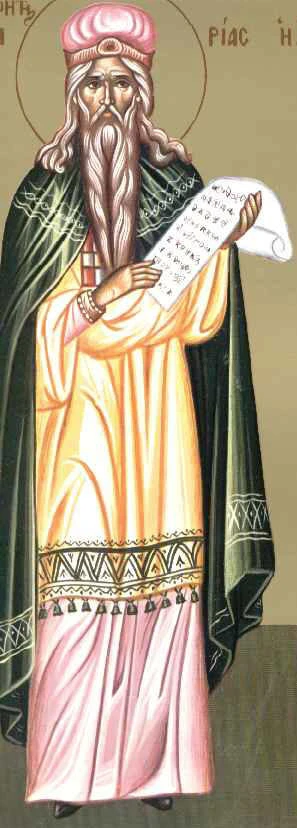
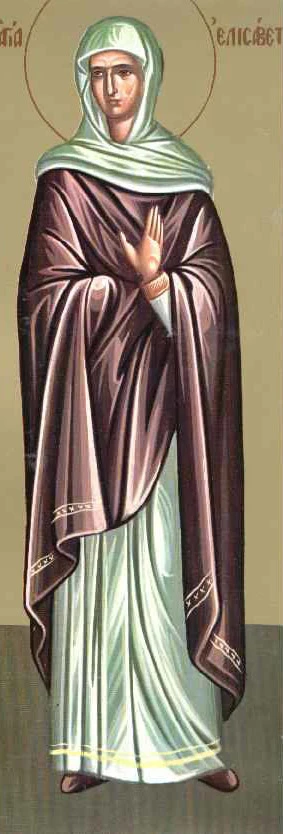
Orthodox icons often portray Zachariah in priestly vestments and Elizabeth in the dignified garments of a righteous matron. They may appear together holding the young Forerunner, at the naming of John, or in scenes of the Visitation. Their iconography directs attention beyond family affection to their place in the preparation for the Incarnation.
Their life teaches perseverance in prayer without reducing prayer to a demand for an immediate result. Zachariah’s temporary doubt was healed rather than allowed to define him. Elizabeth received God’s gift with humility, and together they offered their child back to the divine purpose for which he had been born.
Feast Day
September 5 — Holy Prophet Zachariah and Righteous Elizabeth, parents of Saint John the Baptist.
From the Orthodox Synaxarion
The Prologue from Ohrid places the holy couple within the fulfillment of God’s promise concerning the Forerunner. Their suffering under Herod is remembered together with their righteousness, faithfulness and complete trust in divine providence.
Historical Record and Ecclesiastical Tradition
Luke 1 is the controlling primary account for their righteousness, the annunciation to Zachariah and the birth of Saint John. Their later flight, Elizabeth's concealment and Zachariah's martyrdom belong to ecclesiastical tradition and are not inserted into the Gospel as though Saint Luke recorded them.
Biographical information on this page is based exclusively on the Orthodox ecclesiastical sources listed below.
The Holy Gospel according to Saint Luke, chapter 1 — Biblical foundation of their lifeOrthodox Church in America — Holy Prophet Zachariah and Righteous Elizabeth, Parents of Saint John the BaptistOrthodox Church in America — Nativity of Saint John the BaptistVEMA / Saint Andrew's Orthodox Press — Holy Prophet Zachariah and Righteous ElizabethOrthodox Times, from the Church of Cyprus — Memory of the Holy Prophet Zachariah and Righteous ElizabethThe Prologue from Ohrid — September 5