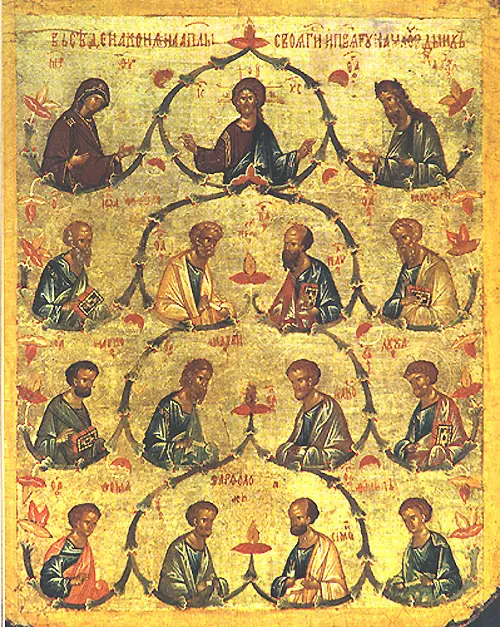
Apostolic Synaxis
Synaxis of the Twelve Holy Apostles
✓ Comprehensive Orthodox source review completed
The Church gathers to honor the Twelve who were chosen by Christ and sent to preach the Gospel to the world.
Core account checked against Orthodox Church in America — Synaxis of the Holy, Glorious and All-Praised Twelve Apostles, Bibliographic reference — The Lives of the Holy Apostles, drawn from the Menology of Saint Dimitri of Rostov and the Great Synaxaristes. Additional ecclesiastical references appear below.
Life and Witness
Life and Historical Setting
On the day after the feast of Saints Peter and Paul, the Orthodox Church celebrates the Synaxis of the Twelve Holy Apostles: Peter, Andrew, James and John the sons of Zebedee, Philip, Bartholomew, Thomas, Matthew, James the son of Alphaeus, Jude the brother of James, Simon the Zealot and Matthias. Chosen and sent by the Lord, they became witnesses of His Resurrection and foundations of the Church's apostolic preaching.
Miracles, Relics and Places of Veneration
The Synaxis gathers the Twelve as one apostolic college while preserving their distinct lives and missions. Relics and shrines are therefore treated under each Apostle individually; the common feast does not imply one collective tomb.
Iconography and Spiritual Meaning
The saint's icon presents a transfigured human person whose holiness is the gift of God. The spiritual lesson is drawn from the received life and worship of the Church, not from invented moral anecdotes.
Feast Day
June 30 — Synaxis of the Twelve Holy Apostles.
In the Hagiographical Tradition
The wider Orthodox hagiographical tradition concerning the Apostles is also preserved in The Lives of the Holy Apostles, an English collection drawn chiefly from the Menology of Saint Dimitri of Rostov and the Great Synaxaristes of the Orthodox Church.
Historical Record and Ecclesiastical Tradition
The Synoptic Gospels and Acts provide the controlling lists of the Twelve, whose small differences of naming—such as Thaddaeus or Judas of James—are explained rather than silently erased. Matthias's replacement of Judas Iscariot is based on Acts 1; later mission fields, deaths and relic histories are drawn from distinct apostolic traditions and never presented as though all were narrated in Scripture.
Biographical information on this page is based exclusively on the Orthodox ecclesiastical sources listed below.
Orthodox Church in America — Synaxis of the Holy, Glorious and All-Praised Twelve ApostlesBibliographic reference — The Lives of the Holy Apostles, drawn from the Menology of Saint Dimitri of Rostov and the Great Synaxaristes