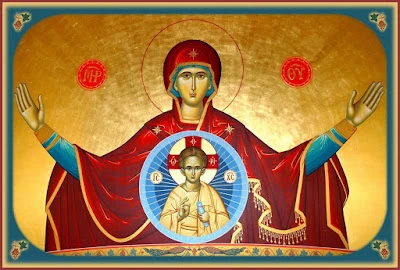
Feast of the Theotokos
Synaxis of the Theotokos in Armatiou
✓ Comprehensive Orthodox source review completed
An ancient Constantinopolitan commemoration of the Mother of God, her holy icon and protecting intercession.
Core account checked against Greek Orthodox Archdiocese of America — Online Chapel, Saints and Feasts, Orthodox Church in America — The Orthodox Faith: Icons, The Prologue from Ohrid — July 21. Additional ecclesiastical references appear below.
Life and Witness
The Constantinopolitan Commemoration
On July 21 the Orthodox calendar preserves the Synaxis of the Most Holy Theotokos in the quarter of Armatiou in Constantinople. A synaxis gathers the faithful for liturgical praise of the Mother of God at a church or shrine associated with her protection and intercession.
The feast belongs to the network of ancient Constantinopolitan commemorations through which the Church honored the Theotokos near her revered icons, garments and sanctuaries. The surviving notices are brief, so details that cannot be established from the ecclesiastical record are not presented as historical fact.
Icon, Healing and Orthodox Veneration
The received tradition connects the commemoration with an icon of the Mother of God and with healings granted through her intercession. During the iconoclastic troubles, sacred images were hidden or protected by the faithful; their restoration testified that the honor shown to an icon passes to the person represented.
The feast directs worship not to wood or paint but to God, while the Mother of God is honored as the one who freely bore the incarnate Word. Her icons proclaim the reality of the Incarnation and call the faithful to obedience, prayer and hope in Christ.
Feast Day
July 21 — Synaxis of the Most Holy Theotokos in Armatiou, Constantinople.
Historical Record and Ecclesiastical Tradition
This is a local Constantinopolitan liturgical synaxis attached to a church or quarter called Armatiou, not a separate event narrated in the New Testament. Because the surviving calendar notices are brief, the page explains the feast's Marian and iconological meaning without inventing a founder, date, relic itinerary or catalogue of miracles.
Biographical information on this page is based exclusively on the Orthodox ecclesiastical sources listed below.
Greek Orthodox Archdiocese of America — Online Chapel, Saints and FeastsOrthodox Church in America — The Orthodox Faith: IconsThe Prologue from Ohrid — July 21