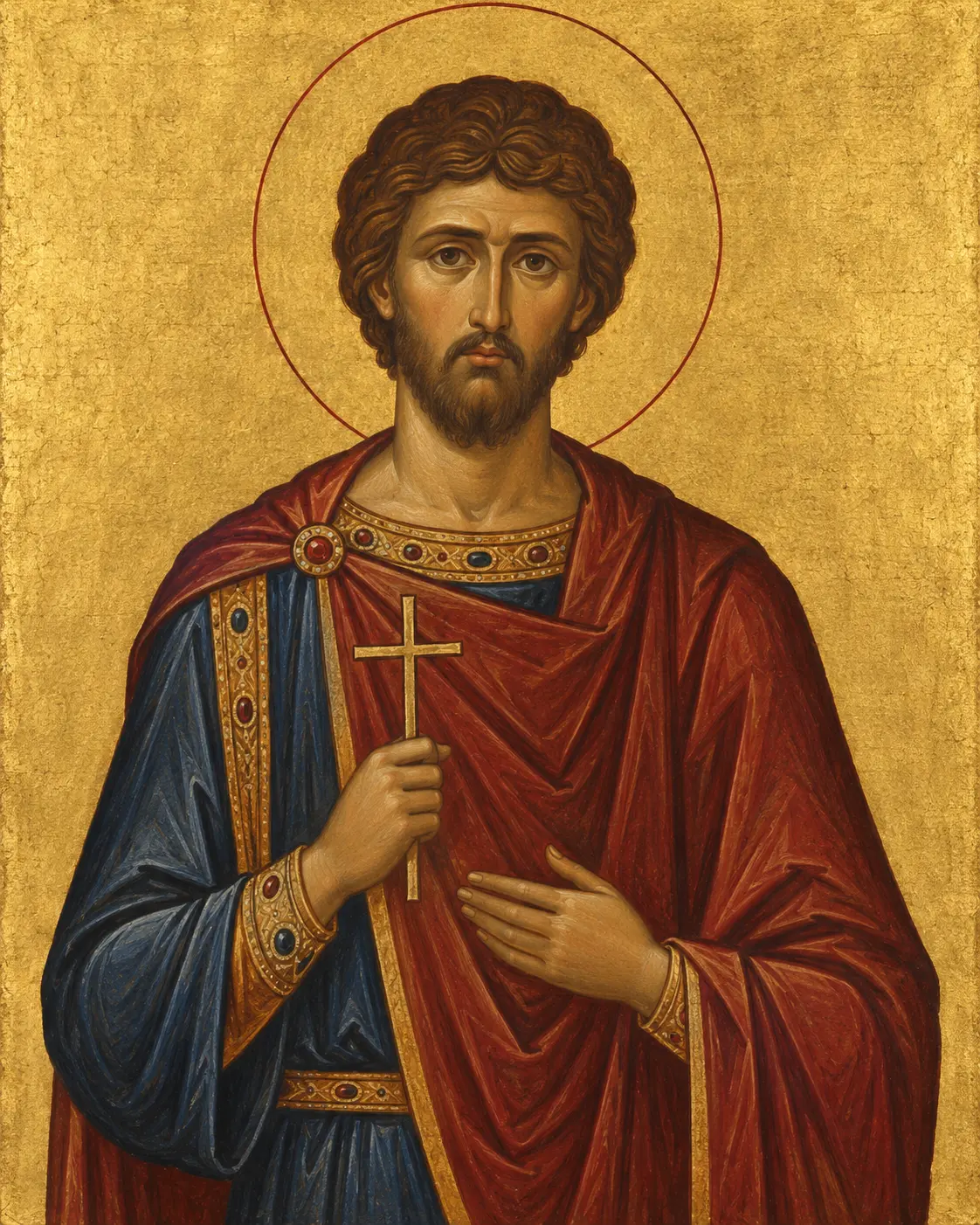
Martyr
Holy Martyr Severian of Sebaste
✓ Comprehensive Orthodox source review completed
A noble Christian of Sebaste who strengthened the Forty Martyrs and later completed his own steadfast witness to Christ.
Core account checked against Orthodox Church in America — Martyr Severian of Sebaste, Orthodox Church in America — Lives of the Saints, September 9, Mystagogy — Synaxarion of the Holy Great Martyr Severian of Sebaste. Additional ecclesiastical references appear below.
Life and Witness
Sebaste and the Persecution of the Church
Saint Severian lived in Sebaste of Lesser Armenia, the city known today as Sivas in Turkey, during the reign of Emperor Licinius. Although Licinius had initially joined Saint Constantine in granting toleration to Christians, he later renewed persecution in the eastern territories under his rule. Governors and military officials demanded sacrifices to the pagan gods, and Christians who refused faced imprisonment, torture and death.
The ecclesiastical tradition presents Severian as a prominent and respected citizen whose Christian life was already well known before his arrest. His faith was not confined to private belief. He strengthened other Christians, attracted pagans to Christ by his example and placed himself in danger by caring openly for those imprisoned for the Gospel.
Friend of the Forty Martyrs of Sebaste
Six months before Severian’s own martyrdom, forty Christian soldiers were imprisoned at Sebaste for refusing to renounce Christ. They would later be exposed upon the frozen lake and receive the crown of martyrdom, becoming the celebrated Forty Martyrs of Sebaste, commemorated on March 9.
Severian visited the soldiers while they were captives. He consoled them, strengthened their resolve and urged them to remain courageous in their confession. At a moment when association with condemned Christians could lead directly to arrest, his visits were acts of both mercy and fearless witness. He did not merely praise martyrdom after it was safely completed; he entered the prison and stood beside the sufferers while their trial was still unfolding.
Their endurance prepared him for his own contest. The communion between Severian and the Forty Martyrs shows an important element of Orthodox martyrdom: the saints do not struggle as isolated heroes. They are sustained by Christ within the fellowship of the Church, through prayer, encouragement and mutual love.
Voluntary Confession Before the Governor
Severian’s Christian example and his support for the imprisoned soldiers brought him to the attention of the provincial governor, named Lysias or Licius in English versions of the ecclesiastical account. Soldiers were ordered to find and arrest him. According to the synaxarial tradition, before they could seize him, Severian presented himself voluntarily before the governor and openly confessed his faith in Christ.
This voluntary appearance was not a reckless search for death. The Church understands it as the mature action of a confessor who would neither hide his faith nor allow others to suffer while searching for him. He stood before earthly authority with freedom because his conscience belonged to Christ.
Interrogation and Tortures
The governor attempted to make Severian submit to the imperial command and offer sacrifice. The martyr refused to exchange the living God for idols fashioned by human hands. When threats failed, he was subjected to severe torments. The sources emphasize not a superhuman absence of pain, but his complete surrender to the will of God. During the torture he called upon the Lord for strength to endure faithfully and bring his martyrdom to completion.
His perseverance exposed the limits of coercion. The authorities could wound the body, but they could not force the conscience to deny Christ. In the Orthodox understanding, such endurance is not produced by pride or stubbornness. It is a gift of divine grace received through prayer by a person who freely remains faithful.
Martyrdom with the Millstones
After the tortures failed to break his confession, Severian was condemned to a cruel death. A heavy stone was fastened around his neck and another to his feet. He was suspended from the city wall under their crushing weight and surrendered his soul to God. The Church dates his martyrdom to approximately the year 320.
The stones intended to disgrace and destroy him became signs of his steadfastness. Christian hymnography interprets the martyr’s suffering through the victory of Christ: the execution does not have the final word, because bodily death becomes passage into the life of the Kingdom. Severian is therefore remembered not as a defeated prisoner but as a crowned martyr.
The Miracle at His Funeral
Christians recovered the holy martyr’s body and carried it toward his home for burial. The faithful of Sebaste gathered to honor him, ask his prayers and accompany him on his final earthly procession. The Orthodox account records that one of Severian’s servants had died and had not yet been buried. As the martyr’s body was being carried past, the servant rose from his deathbed in order to follow his master’s funeral.
The restored man lived for another fifteen years. The tradition says that he remained near the burial place of Saint Severian and did not leave it. The Church preserves this event as a testimony to the grace of God manifested at the martyr’s burial; the power is God’s, while the saint is honored as His faithful servant and intercessor.
Burial, Relics and Places of Veneration
The earliest ecclesiastical narrative locates Severian’s burial in or near his home at Sebaste, surrounded by the local Christians who had known his charity and confession. The sources consulted for this article do not identify a securely documented surviving tomb or a major international shrine containing his relics today. The political and religious history of ancient Sebaste brought repeated upheaval, and many precise local memories were lost.
Likewise, no internationally prominent Orthodox cathedral or monastery dedicated exclusively to Saint Severian could be verified through the ecclesiastical sources used here. He is nevertheless venerated throughout the Orthodox Church, especially through the calendar, the synaxarion, his liturgical hymns and icons. Churches dedicated to the Forty Martyrs of Sebaste also preserve the wider spiritual setting in which his courage first became visible, but they should not be incorrectly presented as churches dedicated to Severian himself.
Orthodox Veneration and Spiritual Teaching
Saint Severian’s life joins three forms of Christian witness: care for prisoners, public confession and patient endurance. Before he was called to suffer, he served those who were already suffering. His martyrdom therefore grew out of an established life of mercy rather than a single dramatic moment.
His memory also teaches that encouragement offered to another Christian can become preparation for one’s own trial. By strengthening the Forty Martyrs, Severian learned from their courage; by honoring their confession, he prepared himself to follow the same path. His feast calls the faithful to visit the afflicted, refuse shame before the Gospel and seek strength from God rather than from self-confidence.
Feast Day
September 9 — Holy Great Martyr Severian of Sebaste.
From the Orthodox Synaxarion
The Prologue from Ohrid remembers Saint Severian as a nobleman of Sebaste who visited, encouraged and ministered to the Forty Martyrs during their imprisonment. When his own confession was tested six months later, he endured torture in thanksgiving to God and completed his martyrdom in the year 320.
Historical Record and Ecclesiastical Tradition
His aid to the Forty Martyrs, voluntary confession and death under suspended stones form the common synaxarial core. The raising of his servant at the funeral is retained as received hagiographical testimony rather than described as independently documented civil history.
Biographical information on this page is based exclusively on the Orthodox ecclesiastical sources listed below.
Orthodox Church in America — Martyr Severian of SebasteOrthodox Church in America — Lives of the Saints, September 9Mystagogy — Synaxarion of the Holy Great Martyr Severian of SebasteAncient Faith Ministries — Holy Martyr Severian of SebasteThe Prologue from Ohrid — September 9