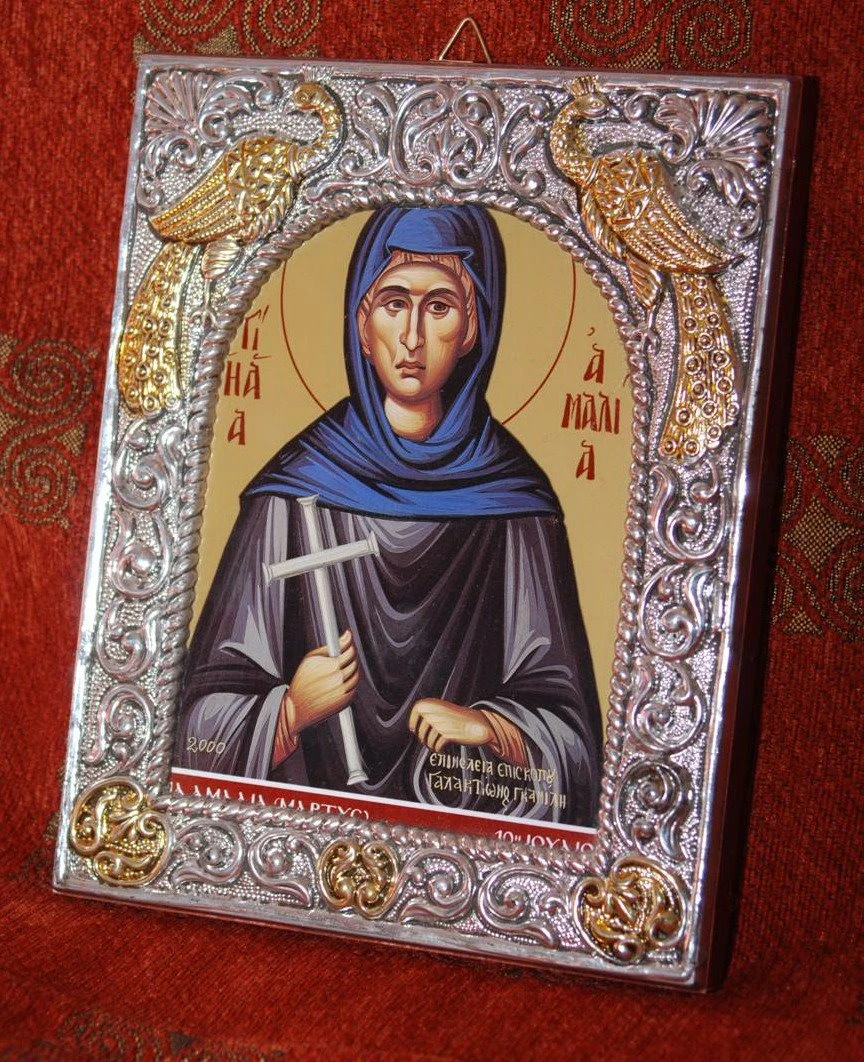
Venerable Woman
Saint Amalia (Amalberga)
✓ Comprehensive Orthodox source review completed
A noblewoman who rejected royal power in order to preserve her dedication to Christ.
Core account checked against Greek Orthodox Archdiocese of America — Online Chapel, Saints and Feasts, Orthodox Church in America — Lives of the Saints, July 10. Additional ecclesiastical references appear below.
Life and Witness
A Life Consecrated to Christ
Saint Amalia, also known in Western sources as Amalberga, is remembered as a noblewoman who chose a life of prayer and chastity rather than the honors offered by a royal court. The ecclesiastical tradition places her in the early medieval Low Countries.
Accounts of her life emphasize her refusal of a powerful suitor and her determination to preserve the dedication she had made to Christ. Because versions differ in chronology and identity, this page follows the liturgical tradition without treating every later embellishment as equally documented history.
Miracles in the Received Tradition
The tradition associates Saint Amalia with healing after an injury to her arm and with a miraculous crossing of water. A fish, commonly described as a sturgeon, became one of her iconographic symbols.
These narratives express the protection of God toward a person who refused coercion and remained faithful to her vocation. They are presented as received hagiographical tradition rather than modern historical reporting.
Veneration
Churches in Belgium and neighboring regions preserve her memory. The saint is invoked especially for steadfastness in vocation and, in local custom, for healing of injuries and illness.
Feast Day
July 10 — Saint Amalia or Amalberga, according to the local ecclesiastical calendar.
Historical Record and Ecclesiastical Tradition
The name Amalberga or Amalia belongs to more than one early medieval western holy woman, and the chronologies and identities are frequently conflated in popular retellings. Because her presence in Byzantine Orthodox calendars is limited, the page identifies the local ecclesiastical character of the commemoration and reports the royal suitor, injured arm, fish and river crossing only as attributed hagiographical traditions.
Biographical information on this page is based exclusively on the Orthodox ecclesiastical sources listed below.
Greek Orthodox Archdiocese of America — Online Chapel, Saints and FeastsOrthodox Church in America — Lives of the Saints, July 10