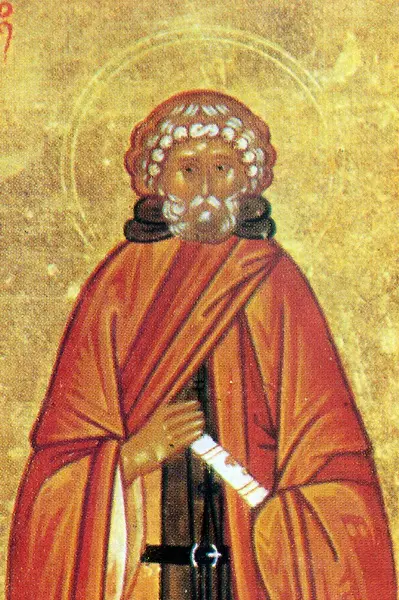
Venerable Father
Saint Moses the Ethiopian
✓ Comprehensive Orthodox source review completed
A feared robber transformed by repentance into a gentle monk and spiritual father.
Core account checked against Orthodox Church in America — Venerable Moses the Ethiopian of Scete, Orthodox Church in America — Venerable Moses the Ethiopian of Scete, The Prologue from Ohrid — August 28. Additional ecclesiastical references appear below.
Life and Witness
From Violence to Repentance
Saint Moses was an Ethiopian who lived first as a slave and then as the feared leader of a band of robbers. His strength and violence made him notorious, yet the grace of God led him to seek refuge among the monks of Scetis in the Egyptian desert.
The peace, prayer and endurance of the fathers revealed a different kind of strength. Moses renounced his former life, received monastic formation and entered a long struggle of repentance rather than imagining that conversion erased the habits of the past immediately.
The Long Ascetic Struggle
He battled temptations through fasting, night prayer, obedience and humble disclosure of his thoughts. When exhaustion alone did not bring freedom, his elders taught him dependence upon God rather than confidence in extreme effort.
One tradition remembers Moses secretly carrying water at night to the cells of older monks. The hands once used for robbery became instruments of quiet service, showing that Orthodox repentance is a concrete transformation of life.
Humility and Mercy
When the brethren gathered to judge a monk, Moses arrived carrying a leaking sack of sand. He explained that his own sins were falling behind him unseen while he had come to judge another. This saying became one of the best-known teachings of the Desert Fathers.
His experience of grave sin made him compassionate rather than severe. He became a priest and spiritual father whose discernment called sinners to responsibility without despair.
Martyrdom and Veneration
When raiders approached Scetis, Moses refused to defend himself with violence and remembered the Lord's warning concerning the sword. He remained with several brothers and received martyrdom around the year 400.
His relics are venerated at the Monastery of the Virgin Mary, commonly called al-Baramus, in Wadi El Natrun. August 28 — Venerable Moses the Ethiopian of Scetis.
From the Orthodox Synaxarion
The Prologue from Ohrid calls Saint Moses a striking witness to the power of repentance. The former robber became a father of monks, teaching by humility, restraint and refusal to judge the sins of another person.
Historical Record and Ecclesiastical Tradition
His transformation from violent robber to monk, formation at Scetis, radical humility and death with fellow monks constitute the common Orthodox witness. Individual sayings are checked against the desert tradition; modern racial terminology is avoided, while the traditional titles 'the Ethiopian' and 'the Black' are explained historically rather than used as stereotypes.
Biographical information on this page is based exclusively on the Orthodox ecclesiastical sources listed below.
Orthodox Church in America — Venerable Moses the Ethiopian of SceteOrthodox Church in America — Venerable Moses the Ethiopian of SceteThe Prologue from Ohrid — August 28The Sayings of the Desert Fathers — Abba MosesThe Prologue from Ohrid — August 28