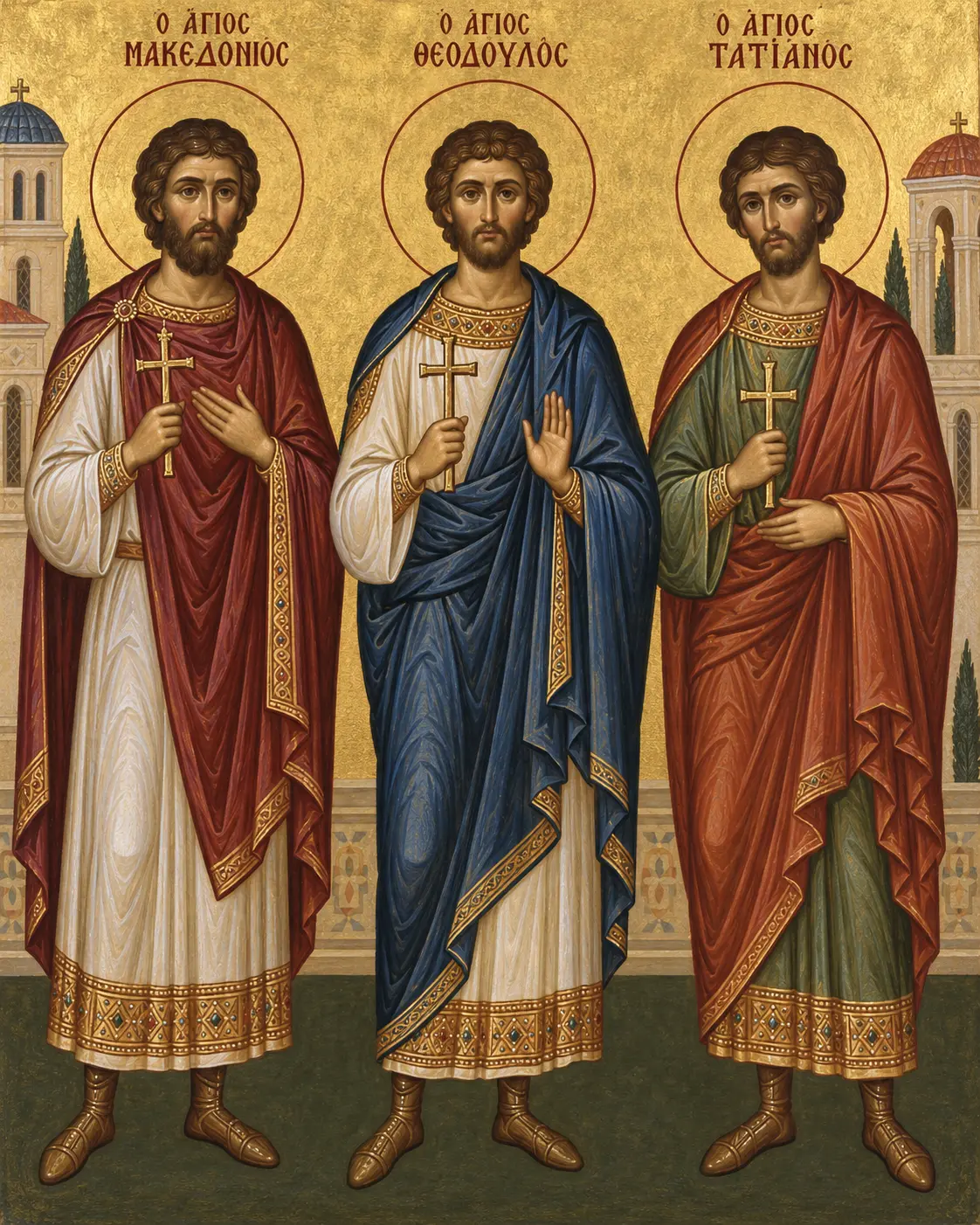
Martyrs of Phrygia
Holy Martyrs Macedonius, Theodulus and Tatian
✓ Comprehensive Orthodox source review completed
Three Christians who accepted responsibility to protect the innocent and endured the fiery gridiron rather than sacrifice to idols.
Core account checked against Orthodox Synaxarion — Holy Martyrs Macedonius, Theodulus and Tatian, Saint Nikodemos the Hagiorite — Synaxarion for September 12, The Prologue from Ohrid — September 12. Additional ecclesiastical references appear below.
Life and Witness
Christians in Phrygia under Julian
The Holy Martyrs Macedonius, Theodulus and Tatian lived in Phrygia during the reign of Emperor Julian the Apostate, from 361 to 363. Julian attempted to restore public pagan worship after the Church had emerged from the earlier imperial persecutions. In the city remembered by the Greek Synaxarion as Myropolis, the governor Amachius ordered a pagan temple to be cleansed and its idols restored for sacrifice.
The three Christians were grieved that worship of the idols was being publicly renewed. Their life is preserved principally as a martyrological account: it records not a long biography of each man, but their common act, confession and death for Christ.
The Idols of the Temple
According to the Orthodox Synaxarion, Macedonius, Theodulus and Tatian entered the temple by night and broke the pagan statues. The act brought an investigation by the governor, whose officials began seizing and mistreating other Christians of the city in order to discover those responsible.
The three martyrs then appeared voluntarily before Amachius. They acknowledged what they had done so that innocent Christians would not continue to suffer in their place. The ecclesiastical account therefore remembers their action together with their willingness to accept responsibility and protect their brethren.
Confession before the Governor
Amachius tried to persuade them to sacrifice to the idols and thereby save their lives. The saints refused to exchange their confession of the living God for freedom. Neither threats nor the prospect of a cruel death separated them from Christ.
Ancient church historians Socrates Scholasticus and Sozomen preserve the wider setting of their martyrdom under Julian. The emperor commonly avoided a formal empire-wide edict of persecution, yet Christians were exposed to violence and local officials could punish those who opposed the restored pagan cults.
Martyrdom on the Fiery Gridiron
When the saints would not sacrifice, the governor condemned them to be burned upon a heated iron gridiron. The received account says that they endured the fire with courage and even told their tormentor that they were being cooked on one side and should be turned, using the language of the ordeal to show that fear had not mastered them.
Their steadfastness was not confidence in bodily strength, but faith that death could not separate them from Christ. They completed their common contest in the year 362 and are honored by the Church among the holy martyrs.
Orthodox Veneration and Feast Day
The three saints are commemorated together because their confession, voluntary surrender and martyrdom formed one witness. Their life calls Christians to reject idolatry, speak truthfully, protect the innocent and remain faithful even when obedience to Christ carries a personal cost.
September 12 — Holy Martyrs Macedonius, Theodulus and Tatian of Phrygia.
Historical Record and Ecclesiastical Tradition
Their martyrdom under Julian and death on the heated gridiron are supported by the ecclesiastical histories of Socrates and Sozomen as well as the Synaxarion. The political context is separated from later devotional elaboration, and their voluntary confession is not presented as permission for private violence today.
Biographical information on this page is based exclusively on the Orthodox ecclesiastical sources listed below.
Orthodox Synaxarion — Holy Martyrs Macedonius, Theodulus and TatianSaint Nikodemos the Hagiorite — Synaxarion for September 12The Prologue from Ohrid — September 12Orthodox Church in America — Lives of the Saints, September 12