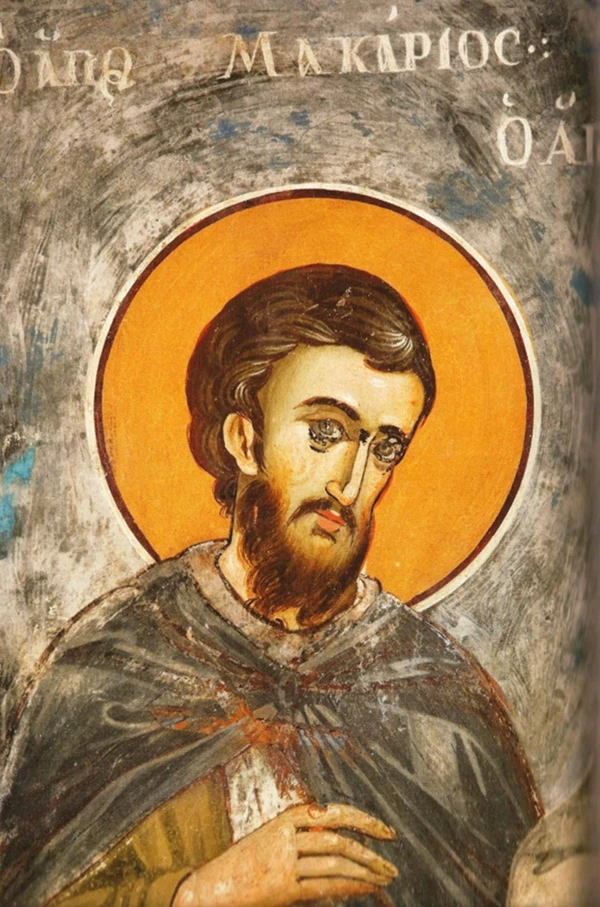
Monk & New Martyr
New Martyr Macarius of Thessalonica
✓ Comprehensive Orthodox source review completed
An Athonite monk and disciple of Saint Niphon who confessed Christ in Ottoman Thessalonica.
Core account checked against Holy Monastery of Dionysiou, Mount Athos — Monastery and spiritual tradition, Greek Orthodox Archdiocese of America — Online Chapel, Saints and Feasts, The Prologue from Ohrid — June 26. Additional ecclesiastical references appear below.
Life and Witness
Disciple of Saint Niphon
The Holy New Martyr Macarius lived as a monk at the Monastery of Dionysiou on Mount Athos and was guided by Saint Niphon, former Patriarch of Constantinople. His monastic formation joined obedience and prayer to a fervent desire to confess Christ.
With a blessing for his course, Macarius went to Ottoman-ruled Thessalonica. He openly proclaimed the Christian faith and refused inducements to abandon Christ.
Confession and Martyrdom
The authorities imprisoned and questioned him, offering freedom and advantage if he accepted Islam. Macarius remained steadfast through threats and suffering.
He was beheaded in Thessalonica in 1527. The Church calls him a New Martyr because his witness occurred under later Ottoman persecution and strengthened Christians living under pressure to apostatize.
Feast Day
June 26 — Holy New Martyr Macarius of Thessalonica.
Historical Record and Ecclesiastical Tradition
The New Martyr Macarius belongs to the well-defined sixteenth-century Athonite and Ottoman setting and is remembered as a disciple of Saint Niphon. His voluntary confession and beheading at Thessalonica in 1527 are drawn from the received new-martyr tradition; the page does not merge him with the numerous ancient and monastic saints named Macarius.
Biographical information on this page is based exclusively on the Orthodox ecclesiastical sources listed below.
Holy Monastery of Dionysiou, Mount Athos — Monastery and spiritual traditionGreek Orthodox Archdiocese of America — Online Chapel, Saints and FeastsThe Prologue from Ohrid — June 26