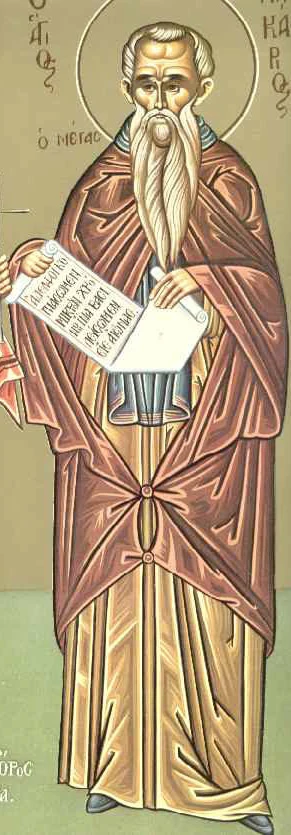
Venerable Father
Saint Macarius the Great
✓ Comprehensive Orthodox source review completed
A great father of the Egyptian desert renowned for humility, discernment and compassionate prayer.
Core account checked against Orthodox Church in America — Venerable Macarius the Great of Egypt, The Prologue from Ohrid — January 19, The Sayings of the Desert Fathers — Macarius the Great (patristic collection). Additional ecclesiastical references appear below.
Life and Witness
Father of the Egyptian Desert
Saint Macarius the Great was born in Egypt around the beginning of the fourth century. After embracing the ascetic life, he withdrew to Scetis and became one of the great fathers of the desert.
His humility was joined to discernment, unceasing prayer and mercy toward those who fell. He was ordained to the priesthood and guided monks without losing the spirit of repentance.
The Skull of the Pagan Priest
The Sayings and later collections of the desert tradition preserve an account in which Macarius found a skull and, after prayer, heard an answer concerning the condition of souls separated from God. The narrative emphasizes both the seriousness of estrangement from divine love and the relief brought by the prayers of Christians.
The story is not a complete map of the afterlife and should not be detached from the Church's broader teaching on judgment, mercy and prayer for the departed. Its spiritual purpose is repentance and compassion, not fear-driven curiosity.
Miracles and Relics
The saint's life records healings, deliverance from demonic oppression and extraordinary discernment. These gifts were understood as fruits of grace and profound humility.
Saint Macarius reposed in peace, and his relics are venerated at the Monastery of Saint Macarius in the Wadi El Natrun desert of Egypt.
Feast Day
January 19 — Venerable Macarius the Great of Egypt.
Historical Record and Ecclesiastical Tradition
Early monastic witnesses, including Palladius and the Sayings of the Desert Fathers, provide the strongest evidence for Macarius's life and spiritual teaching at Scetis. He must be distinguished from Macarius of Alexandria and other namesakes; sayings and later works are attributed cautiously, and the Macarian Homilies are not simply declared his autograph compositions where scholarship and manuscript tradition do not establish that claim.
Biographical information on this page is based exclusively on the Orthodox ecclesiastical sources listed below.
Orthodox Church in America — Venerable Macarius the Great of EgyptThe Prologue from Ohrid — January 19The Sayings of the Desert Fathers — Macarius the Great (patristic collection)