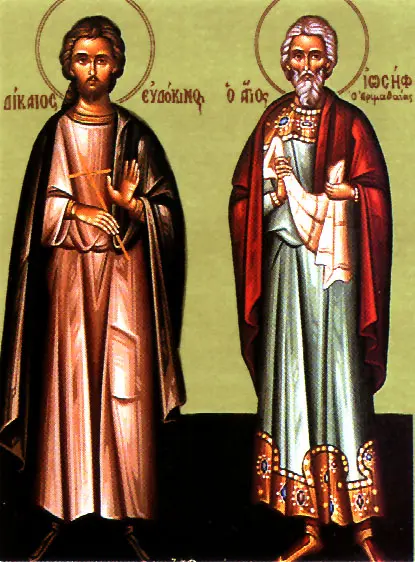
Disciple of the Lord
Righteous Joseph of Arimathea
✓ Comprehensive Orthodox source review completed
The secret disciple who courageously asked Pilate for the body of Christ and laid it in his own new tomb.
Core account checked against Orthodox Church in America — Righteous Joseph of Arimathea, The Prologue from Ohrid — July 31. Additional ecclesiastical references appear below.
Life and Witness
Life and Historical Setting
Joseph was a respected council member who awaited the Kingdom of God and secretly followed Jesus. After the Crucifixion he boldly asked Pilate for the Lord's body, wrapped it in clean linen and placed it in a new tomb.
Miracles, Relics and Places of Veneration
Jerusalem and the Lord's life-giving Tomb are the certain Gospel setting of his service. Later legends about distant missionary journeys differ greatly and are not included unless supported by a recognized Orthodox ecclesiastical source.
Iconography and Spiritual Meaning
The saint's icon presents a transfigured human person whose holiness is the gift of God. The spiritual lesson is drawn from the received life and worship of the Church, not from invented moral anecdotes.
Feast Day
July 31 — Righteous Joseph of Arimathea.
From the Orthodox Synaxarion
The Prologue from Ohrid honors Joseph’s courage after the Crucifixion. The disciple who had remained hidden approached Pilate openly, cared reverently for the Lord’s body and offered his own new tomb for the burial.
Historical Record and Ecclesiastical Tradition
All four canonical Gospels provide the controlling evidence for Joseph's request for Christ's body and burial in the new tomb. Later missions to Britain, the Holy Grail and other western legends are not part of the Orthodox scriptural account and are excluded; later Orthodox traditions are identified separately rather than inserted into the Gospel narrative.
Biographical information on this page is based exclusively on the Orthodox ecclesiastical sources listed below.
Orthodox Church in America — Righteous Joseph of ArimatheaThe Prologue from Ohrid — July 31