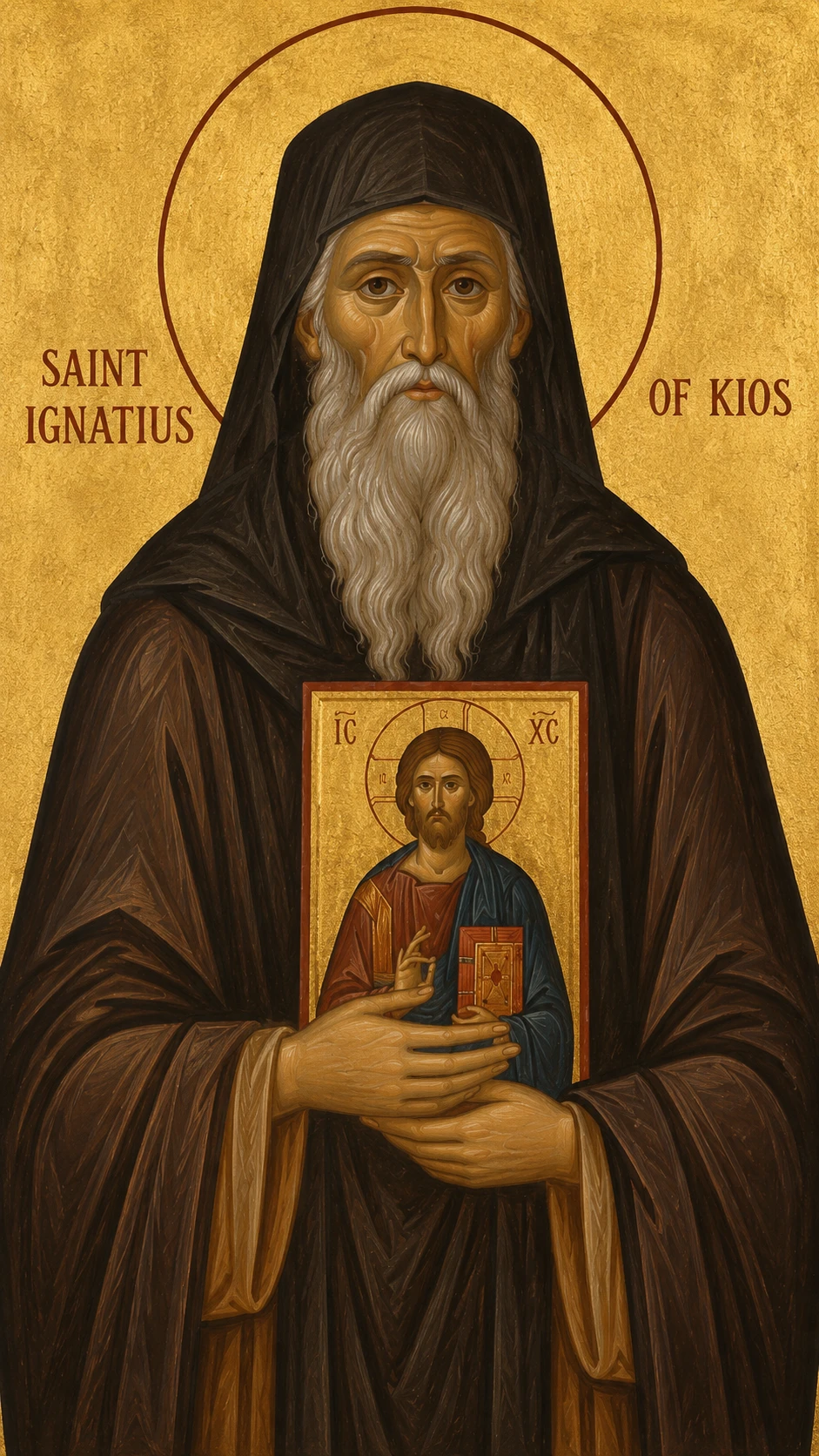
Venerable Martyr & Defender of Icons
Venerable Martyr Ignatius of Kios
The Bithynian monk who defended the holy icons, endured exile on a barren island and completed his confession in peace.
Core account checked against Orthodox Synaxarion — Venerable Martyr Ignatius of Kios, Holy Metropolis of Nea Ionia — Synaxis of the Saints of Kios, Greek Orthodox Archdiocese of Australia — Saint Ignatius the Venerable Martyr. Additional ecclesiastical references appear below.
Life and Witness
From Kios to the Monastic Life
The Venerable Martyr Ignatius was born in Kios of Bithynia, an ancient Greek city on the Propontis, to devout Orthodox parents. He was formed from childhood in prayer, obedience and love for the Church. Though he longed for the angelic life, obedience and affection kept him near his parents until their repose.
He then sold his possessions, distributed the proceeds among the poor, widows and orphans, and kept only enough food for three days. Leaving the world behind, he went to Mount Olympus in Bithynia, one of the great monastic centers of the Byzantine East, where he embraced ascetic discipline.
Ascetic Struggle and Spiritual Formation
Under an experienced elder, Ignatius learned obedience, fasting, vigil, tears of repentance and unceasing prayer. The received Life portrays him as a monk who fought pride and every passion by humility and complete trust in God rather than by confidence in his own strength.
His long formation made him a spiritual guide and defender of the Church. The hagiographical account emphasizes not spectacular achievements for their own sake, but the hidden virtues through which he was prepared to confess the Orthodox faith publicly when the veneration of holy icons came under imperial attack.
Confession during Iconoclasm
During the iconoclast persecution associated with Emperor Leo III, Ignatius left solitude and returned to Kios, where he joined Bishop Eustathios in defending the Orthodox teaching concerning sacred images. Christians do not worship wood and paint as gods; the honor shown to an icon passes to the person represented, while worship belongs to God alone.
Brought before the ruler, Ignatius openly explained the Church's teaching. According to his Life, he produced an icon of Christ that he carried close to his heart, venerated it and refused to renounce the holy images. Neither threats nor suffering moved him from his confession.
Exile on the Rocky Island
The emperor condemned Ignatius to exile on a barren rocky island between Lesbos and Tenedos, intending that isolation, hunger and exposure would destroy him. The saint endured without human comfort, living on wild plants and blessing God through his hardship.
Fishermen who passed the island eventually became his helpers. When Ignatius sensed that his earthly life was ending, he asked them to bring a priest. He received the Holy Mysteries and then prayed, ‘Lord, into Your hands I commend my spirit,’ peacefully completing his course on October 8.
Relics, Veneration and Miracles
The fishermen carried his body back to Kios, where it was buried with honor. After the end of the persecution, the faithful built a church over his tomb and enshrined his relics. Orthodox tradition remembers healings and deliverance from epidemics through his intercession.
Saint Ignatius is honored on October 8 and together with the other saints of Kios on the Sunday following October 10. His witness joins monastic humility to courageous defense of the Incarnation: because the Son of God truly became visible in human flesh, He may be depicted and reverently honored in holy icons.
Source-Critical Summary
The feast on October 8, his origin in Kios, monastic life on Mount Olympus of Bithynia, defense of icons, exile, repose and local veneration form the received ecclesiastical account. The surviving narrative is hagiographical and was transmitted to show the spiritual meaning of his confession.
Specific speeches, the exact geography of the island, the manner of his subsistence and individual healings belong to that received tradition and cannot all be independently verified from contemporary civil records. They are therefore presented as Church tradition rather than reconstructed modern biography.
Biographical information on this page is based exclusively on the Orthodox ecclesiastical sources listed below.
Orthodox Synaxarion — Venerable Martyr Ignatius of KiosHoly Metropolis of Nea Ionia — Synaxis of the Saints of KiosGreek Orthodox Archdiocese of Australia — Saint Ignatius the Venerable Martyr