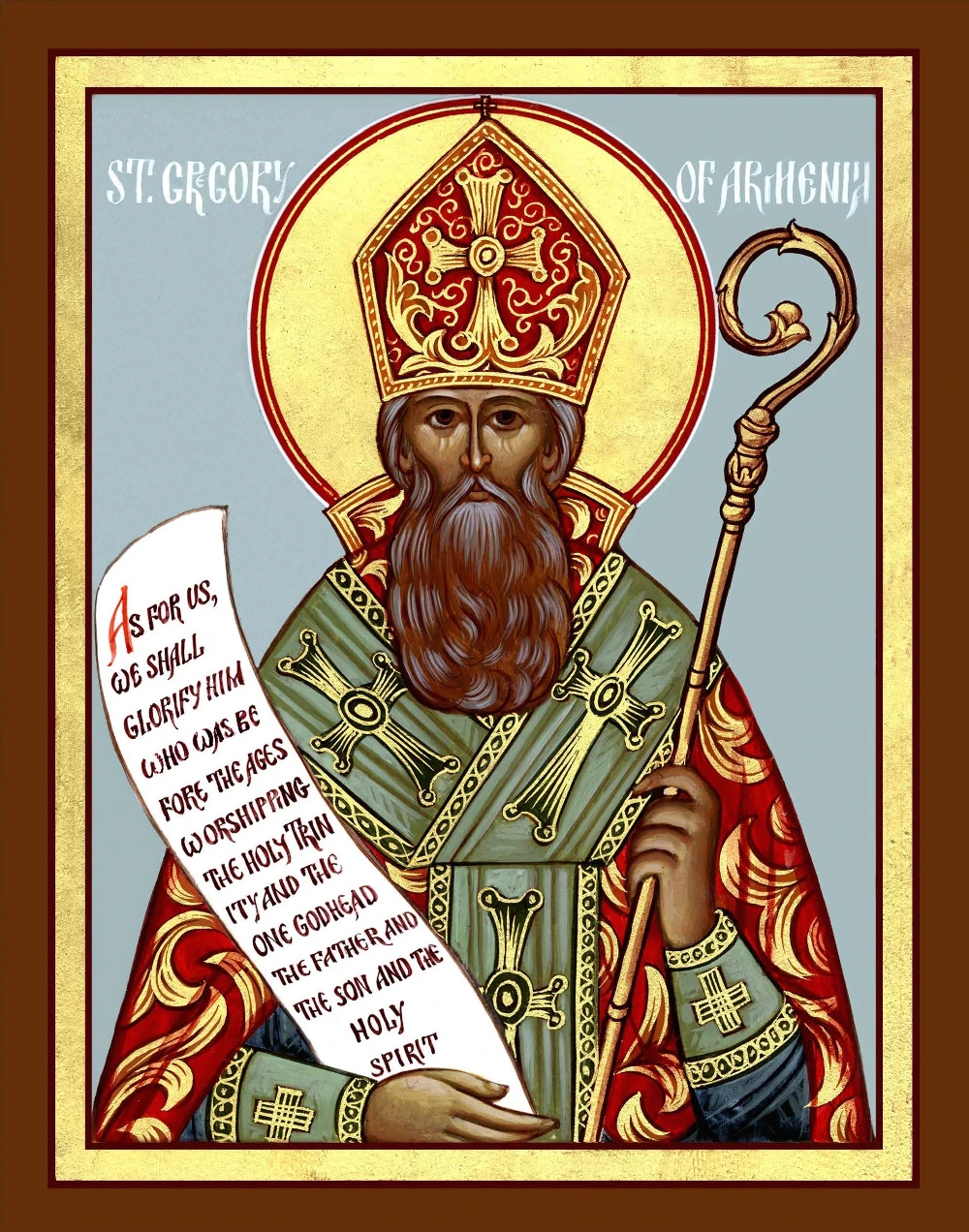
Hieromartyr & Equal-to-the-Apostles
Saint Gregory the Illuminator of Armenia
✓ Comprehensive Orthodox source review completed
The apostolic bishop who survived fourteen years in a pit and led Armenia from persecution to the Christian faith.
Core account checked against Orthodox Church in America — Hieromartyr Gregory, Enlightener of Armenia, Greek Orthodox Archdiocese of America — Gregory the Illuminator, Orthodox Church in America — Troparion and Kontakion. Additional ecclesiastical references appear below.
Life and Witness
From a Wounded Royal House to Faith in Christ
Saint Gregory the Illuminator was born in the third century into a Parthian family connected with the Arsacid royal house. After the violence surrounding the death of the Armenian king, the infant Gregory was taken to safety in the Roman Empire and raised at Caesarea in Cappadocia, where he received the Christian faith.
The Orthodox sources do not turn his ancestry into a claim to worldly power. Gregory eventually entered the service of Tiridates, son of the king killed by Gregory's father, seeking to answer inherited violence with faithful service and a life transformed by Christ.
Confession before King Tiridates
When Tiridates became king of Armenia, Gregory refused to offer sacrifice to the pagan gods. The king learned both that Gregory was a Christian and that he was the son of Anak. Gregory endured repeated tortures while praying and singing the Psalms, yet he would not deny Christ.
At last he was cast into the deep pit later known as Khor Virap, filled in the hagiographical account with serpents and poisonous creatures. The Church receives the tradition that he survived there for fourteen years, secretly sustained with bread by a compassionate woman.
The Holy Virgins and the King's Repentance
During Gregory's imprisonment, King Tiridates persecuted Saint Rhipsime, Saint Gaiane and the holy virgin martyrs who had sought refuge in Armenia. After their martyrdom, the king and members of his household were overcome by a grievous affliction described in the Synaxarion through the image of wild beasts.
A revelation directed the royal household to release Gregory. The saint first gathered and reverently buried the relics of the martyrs, then called the king and people to repentance. Through Gregory's prayers Tiridates was healed, confessed Christ and supported the preaching of the Gospel throughout Armenia.
Illuminator and Bishop of Armenia
Gregory was consecrated bishop by Leontius of Caesarea and returned to shepherd the people he had brought to faith. He ordained clergy, founded churches and monasteries, and organized the life of the Armenian Church. Orthodox tradition therefore honors him as Equal-to-the-Apostles and Enlightener, or Illuminator, of Armenia.
The conversion of a kingdom was not the work of political force alone. The ecclesiastical account places repentance, Baptism, teaching and the witness of the martyrs at its center. Armenia's Christian identity is inseparable from the blood of Rhipsime and her companions and from Gregory's patient confession.
Retirement, Repose and Liturgical Memory
After years of pastoral labor, Saint Gregory withdrew into solitude. His son Aristakes succeeded him and is remembered among the Fathers associated with the First Ecumenical Council at Nicaea. Gregory reposed in peace in the early fourth century; Orthodox calendars differ slightly in the exact year while agreeing on his apostolic ministry.
The Orthodox Church commemorates Saint Gregory on September 30. His hymnography praises him as a successor of the Apostles, a teacher of truth and a hieromartyr who struggled even unto blood. His life calls Christians to answer ancestral hatred with repentance, faithful service and evangelization.
Source-Critical Summary
The stable Orthodox core includes Gregory's Parthian ancestry, Christian formation at Caesarea, service to Tiridates, refusal of sacrifice, long imprisonment, release after the martyrdom of the holy virgins, healing and conversion of the king, episcopal consecration and illumination of Armenia.
The fourteen years in the pit, the manner of the king's affliction and individual chronological details belong to the Church's received hagiographical tradition. Dates vary among Orthodox accounts: some place Gregory's birth around 240, others in 257, and his repose around 325 or later. This page preserves the shared ecclesiastical witness without presenting every chronology as independently verified civil history.
Biographical information on this page is based exclusively on the Orthodox ecclesiastical sources listed below.
Orthodox Church in America — Hieromartyr Gregory, Enlightener of ArmeniaGreek Orthodox Archdiocese of America — Gregory the IlluminatorOrthodox Church in America — Troparion and KontakionGOARCH Digital Chant Stand — Menaion for September 30