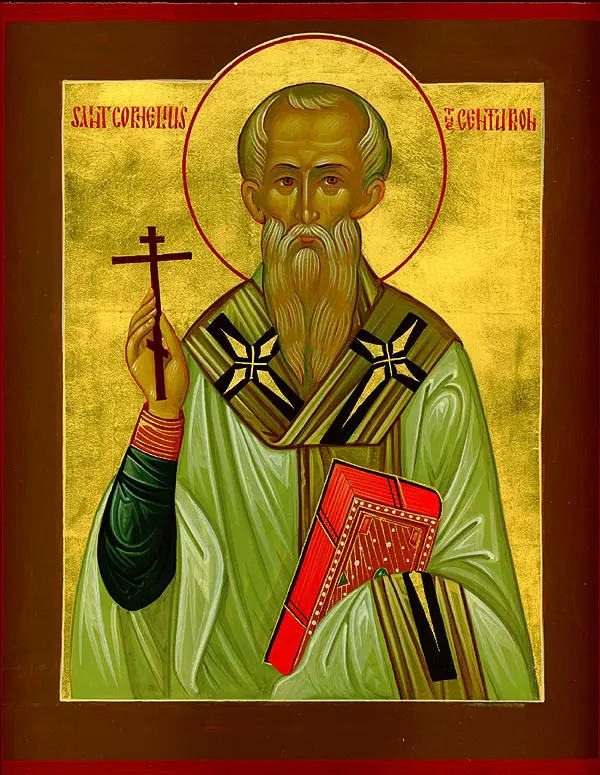
Apostle of the Seventy & Bishop
Holy Hieromartyr Cornelius the Centurion
✓ Comprehensive Orthodox source review completed
The God-fearing Roman centurion whose household received the Gospel and the Holy Spirit through the Apostle Peter.
Core account checked against Holy Scripture — Acts of the Apostles 10:1–11:18, Orthodox Church in America — Hieromartyr Cornelius the Centurion, The Prologue from Ohrid — September 13. Additional ecclesiastical references appear below.
Life and Witness
The Devout Centurion of Caesarea
Saint Cornelius was a Roman centurion stationed at Caesarea in Palestine. Although still a Gentile, he feared God, gave generously to the poor and prayed continually. The Acts of the Apostles presents his household at a decisive moment in the Church’s mission, when the Gospel was openly received by those outside Israel.
While Cornelius prayed, an angel told him that his prayers and alms had risen as a memorial before God. He was instructed to send messengers to Joppa and summon Simon Peter. Cornelius obeyed immediately, gathering relatives and close friends to hear the apostolic word.
The Vision of Saint Peter
As the messengers approached, the Apostle Peter received the vision of a great sheet containing animals regarded as unclean under the Mosaic law. Three times he heard the command to eat, followed by the declaration that what God had cleansed must not be called common.
The Holy Spirit then directed Peter to go with the men without hesitation. Entering the centurion’s house, the Apostle understood that God shows no partiality, but receives in every nation those who fear Him and do what is right.
The First Gentile Household Baptized
Peter proclaimed Jesus Christ: His ministry, Crucifixion and Resurrection, and the forgiveness offered through His name. While he was still speaking, the Holy Spirit descended upon Cornelius and those listening. The Jewish believers heard them glorifying God and recognized that the same gift had been given to the Gentiles.
Cornelius, his household and those gathered with him were baptized. The event, recorded in Acts 10 and explained again in Acts 11, revealed that Gentiles entered the Church through faith in Christ without first becoming Jews. The Church therefore remembers Cornelius as the first-fruits of the nations.
Apostolic Mission and the Miracle at Skepsis
The later Orthodox life relates that Cornelius accompanied the Apostle Peter, was consecrated bishop and was sent to preach in Skepsis, where the ruler Demetrius demanded sacrifice to Apollo and Zeus. Cornelius confessed the true God and prayed inside the pagan temple; an earthquake brought down the temple and its idols.
The ruler’s wife and son were trapped beneath the ruins but remained alive. After Cornelius prayed and they were brought out safely, Demetrius, his family and many inhabitants believed and received Baptism. The miracle in the Synaxarion serves the apostolic purpose of repentance and conversion rather than spectacle.
Repose, Veneration and Feast Day
Saint Cornelius continued his ministry for many years, established the local Church and appointed the presbyter Eunomios. He reposed peacefully in old age and was buried near the place where the pagan temple had stood. The Orthodox Church honors him as Apostle of the Seventy and Hieromartyr, reflecting both his apostolic labor and the tradition surrounding his episcopal witness.
September 13 — Holy Hieromartyr Cornelius the Centurion. His Scriptural account is found chiefly in Acts 10:1–11:18.
Historical Record and Ecclesiastical Tradition
Acts 10–11 is the controlling primary source for Cornelius, his household and Saint Peter's mission to the Gentiles. His later episcopate, mission at Skepsis and associated miracles belong to the received Synaxarion and are explicitly presented as later Orthodox tradition.
Biographical information on this page is based exclusively on the Orthodox ecclesiastical sources listed below.
Holy Scripture — Acts of the Apostles 10:1–11:18Orthodox Church in America — Hieromartyr Cornelius the CenturionThe Prologue from Ohrid — September 13Greek Orthodox Archdiocese of America — Online Chapel, Saints and Feasts