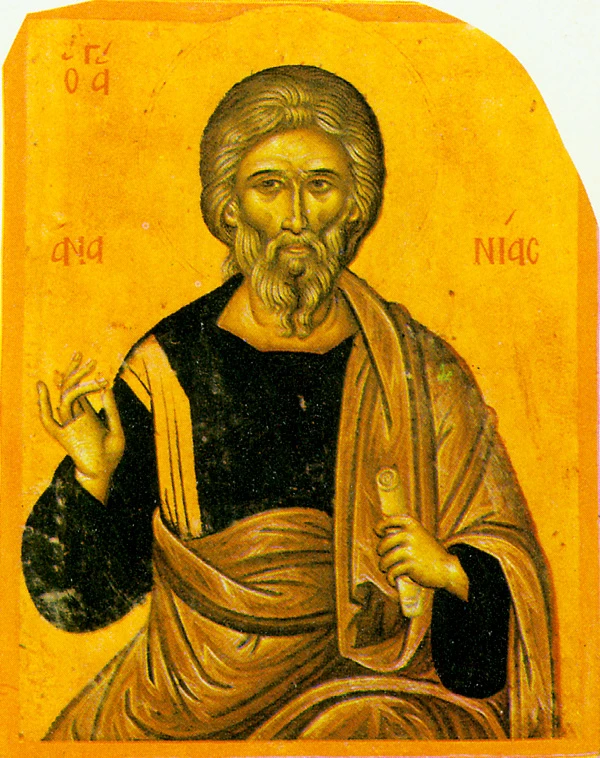
Apostle, Bishop & Martyr
Holy Apostle Ananias of the Seventy
✓ Comprehensive Orthodox source review completed
The disciple of Damascus who obeyed Christ, called the feared persecutor 'Brother Saul' and received the future Apostle Paul into the Church.
Core account checked against Acts of the Apostles 9:10–19 and 22:12–16, Orthodox Church in America — Apostle Ananias of the Seventy, Orthodox Church in America — Troparion and Kontakion. Additional ecclesiastical references appear below.
Life and Witness
A Disciple in Damascus
The Holy Apostle Ananias was a disciple of Christ living in Damascus and is numbered by Orthodox tradition among the Seventy Apostles. Acts 9:10–19 and 22:12–16 provide the controlling New Testament witness: Saint Paul himself later described Ananias as a devout man according to the Law, well spoken of by the Jews of Damascus.
When Saul of Tarsus approached Damascus with authority to arrest Christians, the risen Lord appeared to him. Blinded after the encounter, Saul waited in prayer while Christ called Ananias by name in a vision and sent him to the house of Judas on the street called Straight.
Fear, Obedience and 'Brother Saul'
Ananias honestly expressed his fear: he had heard of the harm Saul had done to the saints in Jerusalem and knew of his authority to bind believers. The Lord did not shame this fear but answered it, declaring that Saul was a chosen instrument who would carry Christ's name before nations, kings and Israel.
Ananias obeyed. Entering the house, he laid hands on the persecutor and addressed him as 'Brother Saul.' He announced that Jesus had sent him so that Saul might regain his sight and be filled with the Holy Spirit. Something like scales fell from Saul's eyes; he rose and was baptized.
The Apostle Who Received the Future Apostle
The video title calls Ananias the man who confronted the destroyer and healed Saul's blindness. The scriptural account is more precise: Ananias did not heal by personal power or win through aggression. Christ sent him, and Ananias became the obedient human minister through whom Saul received sight, the Holy Spirit and Baptism.
His quiet act stands at a turning point in apostolic history. The future Apostle Paul was received not by a famous public figure but by a local disciple willing to trust God's word more than his justified fear. Ananias's greeting also models the Church's faith in genuine repentance: the former persecutor was received as a brother.
Bishop, Missionary and Martyr
The later Orthodox Life remembers Ananias as the first bishop of Damascus. He preached openly to Jews and pagans and later traveled to Eleutheropolis, where the tradition credits his prayer with healings and conversions.
The prefect Lucian ordered him to sacrifice to idols. Ananias refused, endured torture and was led outside the city to be stoned. The ecclesiastical account says that he prayed for those putting him to death. His relics were later translated to Constantinople.
Feast, Readings and Spiritual Meaning
The Orthodox Church commemorates the Apostle Ananias on October 1. The appointed reading from Acts 9:10–19 places the biblical encounter at the heart of his feast, while Luke 10:16–21 connects his mission with the Seventy and with joy that their names are written in heaven.
His life joins discernment to obedience. Christians are not asked to deny danger, excuse persecution or trust every claim of conversion blindly. Ananias listened to Christ, went where he was sent and performed the concrete ecclesial acts entrusted to him. Courage here is faithful obedience, not sensational confrontation.
Source-Critical Summary
Acts 9 and Acts 22 securely attest Ananias as a disciple in Damascus, his vision, his laying hands on Saul, the restoration of sight and Saul's Baptism. These scriptural facts must remain distinct from the later details of his episcopate, mission at Eleutheropolis, trial, stoning and translation of relics.
Those later elements are received Orthodox hagiographical tradition and are presented with explicit attribution. The page does not invent a personal rivalry between Ananias and Saul, and it does not claim that Ananias independently produced the miracle. Christ is the actor; Ananias is the obedient apostolic servant.
Biographical information on this page is based exclusively on the Orthodox ecclesiastical sources listed below.
Acts of the Apostles 9:10–19 and 22:12–16Orthodox Church in America — Apostle Ananias of the SeventyOrthodox Church in America — Troparion and KontakionGreek Orthodox Archdiocese Digital Chant Stand — October 1